When Volume Becomes Exposure: How High-Volume, High-AOV Shippers Should Think About Insurance

By
Kristin Schultz
April 13, 2026

For brands shipping thousands of high-value parcels a month, carrier liability doesn't come close to covering actual exposure. Here's what a real risk program looks like at that scale.

There is a category of shipper for whom the standard insurance conversation is almost entirely wrong. Not the jewelry retailer moving a handful of $2,000 packages a week. Not the small business shipping occasional high-value goods. The shipper this post is about moves thousands of parcels a month containing items like premium outdoor gear, luxury resale, high-end apparel, and consumer electronics. The average declared value sits between $150 and $400 and volume is measured in the thousands.

Brands operating at this profile have an exposure problem that is neither small nor slow. It is large, fast-moving, and routinely underinsured. The gaps in carrier liability that frustrate low-volume shippers become genuinely material at this scale.

The aggregate exposure high-AOV shippers aren't tracking

A shipper moving 3,000 parcels a month at an average declared value of $200, with a loss rate of 0.5 percent, is absorbing $3,000 in monthly uninsured losses. Thirty-six thousand dollars a year. That number rarely appears as a clean line item. It dissolves into re-shipment costs, customer service credits, margin compression on affected SKUs, and write-offs that accounting attributes to something other than what they actually are: an unmanaged insurance gap. Some industry sources estimate that shippers lose or damage about 1% to 1.5% of annual shipping spend, even with preventive measures. That’s a figure that compounds quickly at high declared values.

Increase the average value to $300 — well within range for luxury resellers or premium outdoor brands — and the same loss rate produces $4,500 in monthly exposure. At 5,000 shipments per month, it's $7,500. These are not rounding errors. They are operational costs that a well-structured insurance program eliminates almost entirely, at a premium that is a fraction of the exposure.

The gaps in carrier liability that frustrate low-volume shippers become genuinely material at this scale. Thirty-six thousand dollars a year doesn't dissolve —it compounds.

Why carrier liability fails high-value parcel shippers specifically
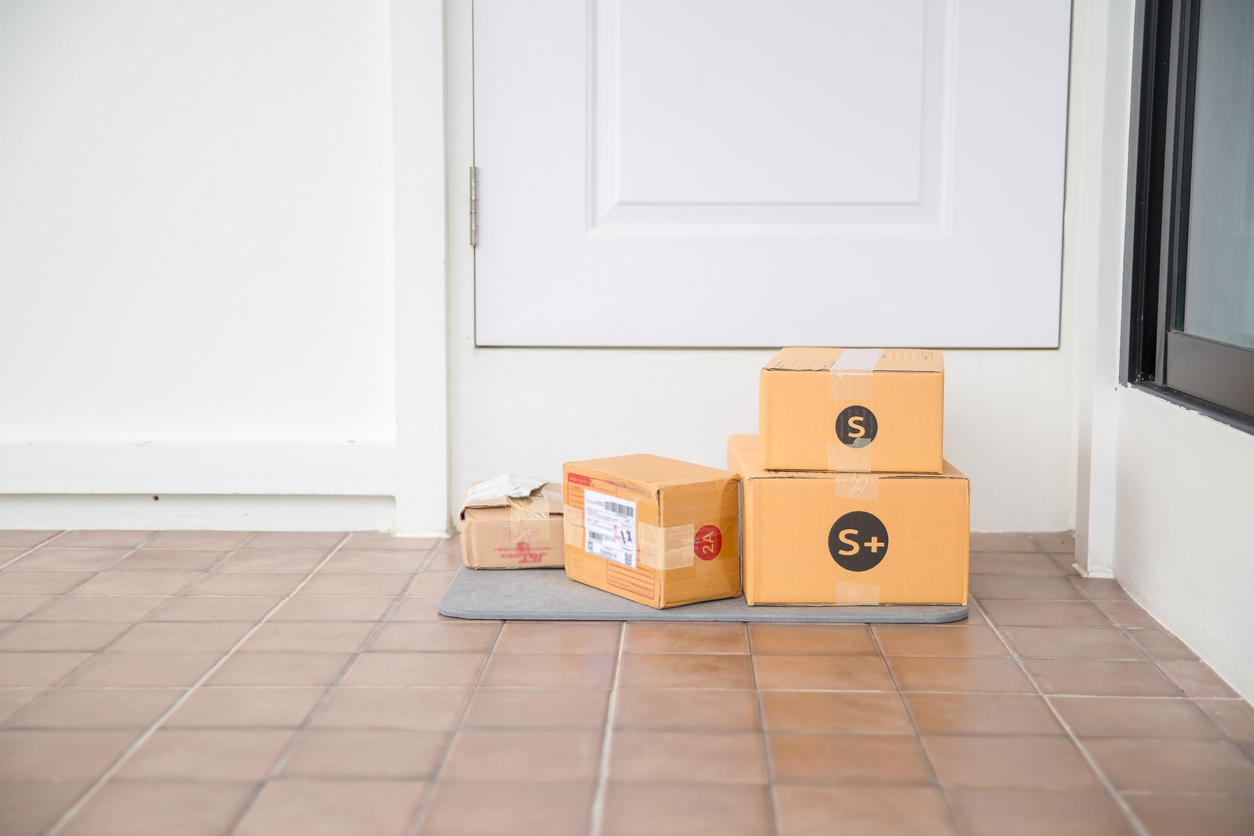
Carrier liability is not insurance. It is a limited contractual obligation, and for high-AOV shippers, the limitations are particularly consequential. USPS Priority Mail includes $100 of coverage automatically. That means a $200 item is underinsured at the carrier level before a single claim is filed. Declared value coverage extends that ceiling but introduces commodity restrictions, documentation requirements, and claim timelines that routinely stretch weeks. A recent industry article reports that USPS claim rejection runs around 38%, while UPS and FedEx may deny roughly 30% to 50% of claims, depending on type, with damage claims denied more often than loss claims.

Private carriers fare better on declared value limits but not on claims experience. Liability is tied to carrier negligence in many cases, which excludes last-mile theft, mysterious disappearance, and damage where the cause is indeterminate. For a luxury consignment platform moving designer goods, or a premium brand whose customer expects a flawless unboxing experience, none of these exclusions are academic. They are the scenarios that actually occur.

Named perils policies have the same structural problem: if the cause of loss isn't explicitly listed, the claim is denied. Porch piracy, for instance — responsible for more than $8.2 billion in online order losses last year — is not a named peril on most carrier liability programs. It is, by definition, covered under all-risk. For brands shipping premium goods in recognizable branded packaging, the exposure is compounded: Pinkerton's research confirms that branded packaging increases theft risk, making high-AOV shippers disproportionate targets.

All-risk coverage at invoice value: what it actually means

All-risk shipping insurance covers every cause of physical loss or damage except those specifically excluded, like inherent vice, improper packaging, a defined short list. For high-AOV shippers, this changes the claims calculus entirely. The question shifts from "does this loss qualify under the policy?" to "is this loss excluded?" For the vast majority of real-world parcel losses, it is not excluded. The claim is paid.

Paid at invoice value. Not at depreciated value, not at carrier-determined replacement cost, not at a negotiated settlement. At the amount on the commercial invoice. For a $280 insulated tumbler or a $350 resale jacket, that distinction is the difference between a program that works and one that doesn't.

Loss ratio as a management metric

Most shippers treat insurance as a procurement decision: find the lowest per-package rate, renew annually, and file claims when something goes wrong. Shippers who run their programs well treat loss ratio as a live metric, one that tells them which carriers are costing more than their rates suggest, which routes carry elevated damage rates, and where packaging failures are creating preventable claims.

A loss ratio above expected benchmarks is a signal, not just a cost. It points to something operationally correctable: a carrier whose last-mile performance in a specific region has degraded, a packaging specification failing under certain transit conditions, a product category generating disproportionate damage claims. The data is in the claims. The question is whether anyone is reading it.

This is the difference between an insurance program and a risk operations program. The former pays claims. The latter generates intelligence — trend reporting, carrier performance data, and packaging guidance — that makes each subsequent shipment less likely to produce a claim. At volume, that compounding improvement is significant.

What USPS shippers at this value tier need to know

USPS remains a primary carrier for many high-volume e-commerce brands due to competitive rates, broad last-mile coverage, and a network that no private carrier fully replicates. For high-AOV shippers using USPS, the coverage gap is most acute. Default Priority Mail coverage at $100 is structurally inadequate for goods retailing at $200 or above. Declared value supplements help but don't solve the problem: commodity restrictions can disqualify entire product categories, and the USPS claims process requires waiting up to 15 days before filing on a lost package, with resolution timelines extending further from there. For an operation processing hundreds of shipments daily, that lag is a cash flow problem as much as an administrative one.

Third-party all-risk coverage integrated at the label level changes the operational picture. Cabrella is a USPS-approved label software partner, which means all-risk coverage at declared value — up to $150,000 per shipment — is embedded in the label generation workflow, not managed as a separate process. For a luxury reseller shipping 200 packages a day through USPS, that integration means consistent coverage on every shipment without a separate filing, portal, or step in the fulfillment process.

Real-time alerts and loss detection at high-AOV volume

A shipper moving 3,000 parcels a month cannot monitor exceptions manually. Non-scans, delivery anomalies, and regional disruptions need to surface automatically, before a customer reports a missing $300 package and before the claim window has started closing. At high declared values, the cost of a single undetected loss pattern is not trivial. Five unreported non-deliveries in a week at $250 average value is $1,250 in confirmed exposure before anyone has noticed the pattern.

Real-time shipment alerts function as an early intervention layer. An exception flagged at 48 hours can be investigated and resolved before it becomes a confirmed loss and a customer service escalation. A regional disruption identified proactively allows outbound communication rather than reactive damage control. For high-AOV operations where each package represents a meaningful dollar amount and a customer relationship, that proactive layer is not a nice-to-have. It is the operational standard that separates a managed program from an unmanaged one.

What a well-structured program looks like — and why claims speed matters more than it seems

Coverage up to $150,000 per shipment. Claims paid at invoice value. Human adjusters reviewing every claim — not automated systems applying denial logic to ambiguous documentation. Payouts in 7 to 10 days. Real-time exception alerts. Trend reporting that identifies loss patterns before they compound. These are the specifications of a program built for shippers whose per-unit values make every claim count.

The human adjuster point deserves specific attention. Automated claims systems apply rule-based logic: if documentation matches denial criteria, the claim is denied, often with no meaningful escalation path short of a formal dispute that adds weeks to the resolution. For high-value claims with any ambiguity, such as a carrier scan that doesn't match delivery confirmation, a damage photo that doesn't clearly establish cause, automated systems default toward denial. A human adjuster reviews the file with context. They can request clarification, assess documentation on its merits, and make judgment calls that a rule system cannot. The operational difference is one named contact, a defined resolution timeline, and no follow-up emails sent into a void.

The 7 to 10 day payout timeline matters for a different reason. For high-volume operations, claims are a recurring feature of the business. Carrier claims processes typically run 30 to 90 days from filing to resolution, a window during which the business has already absorbed replacement or refund costs. A program that resolves claims in under two weeks produces predictable cash flow. Finance can model it. Operations can plan around it. A program that stretches to 60 days, with follow-up required at each stage, produces something else entirely: an administrative burden that consumes staff time, delays recoveries, and introduces variance into a part of the business that should be routine.

Cabrella works with high-volume, high-AOV shippers to close coverage gaps, model aggregate exposure, and build programs calibrated to actual shipment profiles, not generic rate sheets. Talk to a Cabrella specialist about your shipment profile.


Subscribe to newsletter

Stay informed about our latest about our latest technology updates, claim trends, new product updates and essential tips.

Share this post

When Volume Becomes Exposure: How High-Volume, High-AOV Shippers Should Think About Insurance

For brands shipping thousands of high-value parcels a month, carrier liability doesn't come close to covering actual exposure. Here's what a real risk program looks like at that scale.

There is a category of shipper for whom the standard insurance conversation is almost entirely wrong. Not the jewelry retailer moving a handful of $2,000 packages a week. Not the small business shipping occasional high-value goods. The shipper this post is about moves thousands of parcels a month containing items like premium outdoor gear, luxury resale, high-end apparel, and consumer electronics. The average declared value sits between $150 and $400 and volume is measured in the thousands.

Brands operating at this profile have an exposure problem that is neither small nor slow. It is large, fast-moving, and routinely underinsured. The gaps in carrier liability that frustrate low-volume shippers become genuinely material at this scale.

The aggregate exposure high-AOV shippers aren't tracking

A shipper moving 3,000 parcels a month at an average declared value of $200, with a loss rate of 0.5 percent, is absorbing $3,000 in monthly uninsured losses. Thirty-six thousand dollars a year. That number rarely appears as a clean line item. It dissolves into re-shipment costs, customer service credits, margin compression on affected SKUs, and write-offs that accounting attributes to something other than what they actually are: an unmanaged insurance gap. Some industry sources estimate that shippers lose or damage about 1% to 1.5% of annual shipping spend, even with preventive measures. That’s a figure that compounds quickly at high declared values.

Increase the average value to $300 — well within range for luxury resellers or premium outdoor brands — and the same loss rate produces $4,500 in monthly exposure. At 5,000 shipments per month, it's $7,500. These are not rounding errors. They are operational costs that a well-structured insurance program eliminates almost entirely, at a premium that is a fraction of the exposure.

The gaps in carrier liability that frustrate low-volume shippers become genuinely material at this scale. Thirty-six thousand dollars a year doesn't dissolve —it compounds.

Why carrier liability fails high-value parcel shippers specifically

Carrier liability is not insurance. It is a limited contractual obligation, and for high-AOV shippers, the limitations are particularly consequential. USPS Priority Mail includes $100 of coverage automatically. That means a $200 item is underinsured at the carrier level before a single claim is filed. Declared value coverage extends that ceiling but introduces commodity restrictions, documentation requirements, and claim timelines that routinely stretch weeks. A recent industry article reports that USPS claim rejection runs around 38%, while UPS and FedEx may deny roughly 30% to 50% of claims, depending on type, with damage claims denied more often than loss claims.

Private carriers fare better on declared value limits but not on claims experience. Liability is tied to carrier negligence in many cases, which excludes last-mile theft, mysterious disappearance, and damage where the cause is indeterminate. For a luxury consignment platform moving designer goods, or a premium brand whose customer expects a flawless unboxing experience, none of these exclusions are academic. They are the scenarios that actually occur.

Named perils policies have the same structural problem: if the cause of loss isn't explicitly listed, the claim is denied. Porch piracy, for instance — responsible for more than $8.2 billion in online order losses last year — is not a named peril on most carrier liability programs. It is, by definition, covered under all-risk. For brands shipping premium goods in recognizable branded packaging, the exposure is compounded: Pinkerton's research confirms that branded packaging increases theft risk, making high-AOV shippers disproportionate targets.

All-risk coverage at invoice value: what it actually means

All-risk shipping insurance covers every cause of physical loss or damage except those specifically excluded, like inherent vice, improper packaging, a defined short list. For high-AOV shippers, this changes the claims calculus entirely. The question shifts from "does this loss qualify under the policy?" to "is this loss excluded?" For the vast majority of real-world parcel losses, it is not excluded. The claim is paid.

Paid at invoice value. Not at depreciated value, not at carrier-determined replacement cost, not at a negotiated settlement. At the amount on the commercial invoice. For a $280 insulated tumbler or a $350 resale jacket, that distinction is the difference between a program that works and one that doesn't.

Loss ratio as a management metric

Most shippers treat insurance as a procurement decision: find the lowest per-package rate, renew annually, and file claims when something goes wrong. Shippers who run their programs well treat loss ratio as a live metric, one that tells them which carriers are costing more than their rates suggest, which routes carry elevated damage rates, and where packaging failures are creating preventable claims.

A loss ratio above expected benchmarks is a signal, not just a cost. It points to something operationally correctable: a carrier whose last-mile performance in a specific region has degraded, a packaging specification failing under certain transit conditions, a product category generating disproportionate damage claims. The data is in the claims. The question is whether anyone is reading it.

This is the difference between an insurance program and a risk operations program. The former pays claims. The latter generates intelligence — trend reporting, carrier performance data, and packaging guidance — that makes each subsequent shipment less likely to produce a claim. At volume, that compounding improvement is significant.

What USPS shippers at this value tier need to know

USPS remains a primary carrier for many high-volume e-commerce brands due to competitive rates, broad last-mile coverage, and a network that no private carrier fully replicates. For high-AOV shippers using USPS, the coverage gap is most acute. Default Priority Mail coverage at $100 is structurally inadequate for goods retailing at $200 or above. Declared value supplements help but don't solve the problem: commodity restrictions can disqualify entire product categories, and the USPS claims process requires waiting up to 15 days before filing on a lost package, with resolution timelines extending further from there. For an operation processing hundreds of shipments daily, that lag is a cash flow problem as much as an administrative one.

Third-party all-risk coverage integrated at the label level changes the operational picture. Cabrella is a USPS-approved label software partner, which means all-risk coverage at declared value — up to $150,000 per shipment — is embedded in the label generation workflow, not managed as a separate process. For a luxury reseller shipping 200 packages a day through USPS, that integration means consistent coverage on every shipment without a separate filing, portal, or step in the fulfillment process.

Real-time alerts and loss detection at high-AOV volume

A shipper moving 3,000 parcels a month cannot monitor exceptions manually. Non-scans, delivery anomalies, and regional disruptions need to surface automatically, before a customer reports a missing $300 package and before the claim window has started closing. At high declared values, the cost of a single undetected loss pattern is not trivial. Five unreported non-deliveries in a week at $250 average value is $1,250 in confirmed exposure before anyone has noticed the pattern.

Real-time shipment alerts function as an early intervention layer. An exception flagged at 48 hours can be investigated and resolved before it becomes a confirmed loss and a customer service escalation. A regional disruption identified proactively allows outbound communication rather than reactive damage control. For high-AOV operations where each package represents a meaningful dollar amount and a customer relationship, that proactive layer is not a nice-to-have. It is the operational standard that separates a managed program from an unmanaged one.

What a well-structured program looks like — and why claims speed matters more than it seems

Coverage up to $150,000 per shipment. Claims paid at invoice value. Human adjusters reviewing every claim — not automated systems applying denial logic to ambiguous documentation. Payouts in 7 to 10 days. Real-time exception alerts. Trend reporting that identifies loss patterns before they compound. These are the specifications of a program built for shippers whose per-unit values make every claim count.

The human adjuster point deserves specific attention. Automated claims systems apply rule-based logic: if documentation matches denial criteria, the claim is denied, often with no meaningful escalation path short of a formal dispute that adds weeks to the resolution. For high-value claims with any ambiguity, such as a carrier scan that doesn't match delivery confirmation, a damage photo that doesn't clearly establish cause, automated systems default toward denial. A human adjuster reviews the file with context. They can request clarification, assess documentation on its merits, and make judgment calls that a rule system cannot. The operational difference is one named contact, a defined resolution timeline, and no follow-up emails sent into a void.

The 7 to 10 day payout timeline matters for a different reason. For high-volume operations, claims are a recurring feature of the business. Carrier claims processes typically run 30 to 90 days from filing to resolution, a window during which the business has already absorbed replacement or refund costs. A program that resolves claims in under two weeks produces predictable cash flow. Finance can model it. Operations can plan around it. A program that stretches to 60 days, with follow-up required at each stage, produces something else entirely: an administrative burden that consumes staff time, delays recoveries, and introduces variance into a part of the business that should be routine.

Cabrella works with high-volume, high-AOV shippers to close coverage gaps, model aggregate exposure, and build programs calibrated to actual shipment profiles, not generic rate sheets. Talk to a Cabrella specialist about your shipment profile.

Subscribe for Email Updates

icon